When Anger Finds a Body: Collective Storytelling Through Experimental Art and Theater
BELONGINGSTORYTELLINGCREATIVITY
2/9/20262 min read
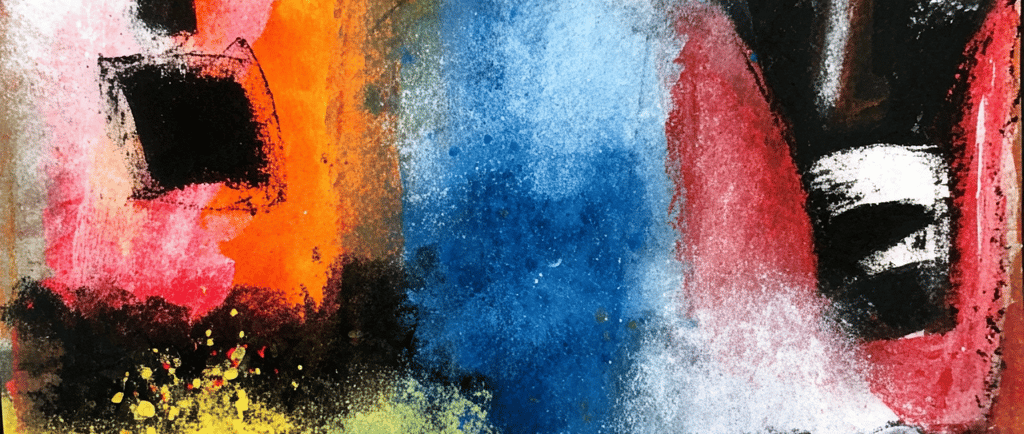

Yesterday, my colleague, dear friend, Azadeh Kangarani, and I held a workshop for a group of young adult women. What unfolded was far more than a creative session, it became a living, breathing exploration of personal storytelling, collective embodiment, and the emotions many of us carry for years without naming.
Our intention was to explore how experimental art and theater can foster self-expression and deepen personal narratives. But before creativity could emerge, we began by building connection, trust, and a sense of safety, a necessary ground from which expression can grow.
From Individual to Collective Creation
The creative process began with a visual prompt: “When did I feel invisible?”
Each participant responded through individual visual expression. Slowly, something shifted. As the women shared their creations, they began to recognize similarities, echoes of emotion, mirrored experiences, shared words.
What once lived privately started weaving itself into a collective story.
Anger.
Fear.
A deep desire to be seen.
These emotions appeared again and again, across different stories and forms. What felt personal revealed itself as communal.
The Body as a Living Installation
From these shared themes, the group was invited to create a live, moving installation — a collective embodiment of the emotions and traits they had discovered together.
As bodies moved, connected, and responded to one another, anger emerged as the dominant theme. Not explosive or chaotic, but present, heavy, undeniable.
As I observed this process, I felt something settle in my chest: How many of us, women, still hold anger inside, unexpressed, softened, or fragmented.
The Unspoken Rules Around Women and Anger
Even when we intellectually understand that anger is a natural human emotion, many of us still carry invisible limitations around expressing it.
We may scream — but only so much.
Move our bodies — but not too wildly.
Let anger surface — but keep it contained, polite, acceptable.
So the emotion remains diffused.
Half-felt.
Half-allowed.
I shared with the group my own struggles with fully expressing anger, and how deeply this difficulty is rooted in social conditioning. Many of us were taught, directly or indirectly, that certain emotions are not allowed for girls. That anger makes us “too much,” undesirable, or wrong. That if we express it fully, something about us becomes unlovable.
These messages leave deep, internalized marks.
Permission as a Radical Act
The core of healing, I am learning again and again, lies in doing the opposite.
In this case, it means giving ourselves permission to express anger, not to harm others, but to allow the emotion its full force and presence.
Anger does not need to be misused to be real.
It does not need to be justified to be expressed.
It does not need to be quiet to be valid.
The sound that wants to leave the body.
The movement that shakes through the chest.
The rawness that asks to be seen.
All of this is part of our humanity.
When we deny these expressions, we deny parts of ourselves.
This process reminded me once again of my own internal boundaries, the parts of myself I learned to hide, soften, or silence. It reminded me how essential it is to continually grant myself permission to express those parts, especially anger, which plays a central and necessary role in my inner landscape.
Anger, when allowed, becomes clarity.
Movement.
Truth.
And sometimes, when shared in a collective body, it becomes connection.