The Lessons of Exclusion
BELONGINGCREATIVITYSTORYTELLING
11/28/20254 min read

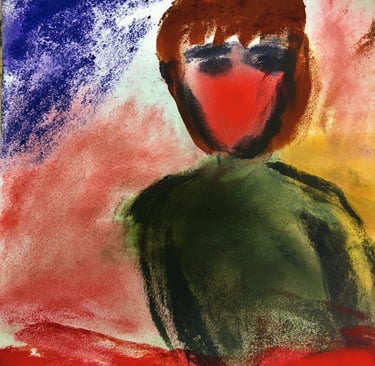
Today, I return again to the theme of exclusion, a subject that has woven itself through many of my earlier blog posts. This is not the first time I approach it, and I suspect it will not be the last. Exclusion keeps arising in my life like a persistent teacher, placing itself at the center of a wider narrative and calling me into deeper contemplation.
There is something about this season that brings the topic closer. And so I find myself asking: What does exclusion want to show me now?
Returning to a Familiar Theme
Exclusion can appear subtly, like a faint shift in the air, or it can arrive with the unmistakable force of a slammed door. Sometimes it takes the shape of being kept from information at the very moment we need it most, those critical moments when clarity could steady us, yet the answers remain on the other side of someone else’s silence.
At other times, exclusion reveals itself when we stand at the edge of spaces that hold our own stories, spaces that feel familiar yet remain closed to us, as if our presence would disrupt the delicate balance within. We watch as others walk easily into rooms where we linger only at the threshold, aware of our own invisible boundary.
And places that we are denied entry into where roots quietly grows.
These experiences leave behind emotional echoes, sometimes soft and distant, and sometimes sharp enough to cut into the present moment. They remind us how profoundly human it is to want to be seen, to be welcomed, to have our truth acknowledged. And beneath it all lies a deeper truth: exclusion does not just push us outward; it reveals the vast inner landscapes where our longing lives, urging us to understand what belonging truly means.
What My Own Exclusions Have Taught Me
Building a life in a new country has brought the theme of exclusion into sharper, almost unavoidable focus. Beginning again from scratch requires a slow reconstruction of identity, a careful gathering of pieces that once fit effortlessly together but now feel scattered across unfamiliar landscapes.
When language is still taking shape on our tongues, when it lives somewhere between hesitation and hope, we find ourselves not only on the outside of deeper conversations but also distanced from the subtle nuances, quiet meanings, and unspoken signals that help people feel rooted in a place.
In these moments, exclusion does not always come from people, sometimes it rises from the words themselves. A language we have not yet fully claimed can stand between us.
This creates a particular kind of ache, a soft displacement that settles in the body before the mind understands it. There is a quiet loneliness that unfolds in the spaces where we cannot yet express ourselves fully, a gentle but persistent distance from community that leaves us hovering at the edge of connection.
Inside, an inner tension grows between the person we once were and the person we are slowly becoming in this new landscape. It is as if two versions of the self must learn to coexist while the ground beneath them continually shifts.
In such moments, exclusion becomes a double force: something enacted from the outside and something we feel internally, a shadow that falls both around us and within us. It shapes our experience, but it also invites us to examine who we are in the spaces where words, identity, and belonging are still in the process of being rebuilt.
As painful as these experiences can be, they have also become unexpected teachers, revealing truths I might never have discovered otherwise. Exclusion, with all its sharp edges, has shown me the quiet importance of boundaries.
Often it arrives disguised as a boundary imposed by others, a door closed, a space withheld—but beneath that, it mirrors the places where my own boundaries were fragile or undefined. Through these moments, I am slowly learning to draw clearer lines, both inside myself and in the world around me, so that I no longer abandon my own needs in the hope of being welcomed somewhere else.
Exclusion has also taught me about the power of self-definition. When a person, a place, or a circumstance denies me access, I am forced back into the heart of who I am. I am reminded that my identity cannot be shaped by the approval or permission of others. It asks me to speak my own name with confidence, to affirm my inner truth even when external spaces remain closed.
Most of all, exclusion has illuminated the necessity of belonging to myself. It has guided me toward building an inner home, a place where my story is not questioned, where my voice does not need to earn its right to be heard. Within this inner space, I am both the keeper and the welcomed guest.
Through these lessons, exclusion becomes something more than pain, it becomes a compass. It directs me inward, toward a steadier center, reminding me that while the world may open and close its doors, the door within me must remain gently, steadfastly open.
Turning Exclusion Into Insight
Exclusion, though harsh, can become a lantern. It illuminates the rooms within us where we are still waiting to be invited. It reveals the thresholds we fear to cross, the stories we are afraid to claim, the boundaries longing to be drawn in gentle, firm lines.
As I continue navigating new landscapes, unfamiliar languages, and shifting relationships, exclusion remains one of my greatest teachers.
It teaches me where I need to stand stronger.
Where I need to soften.
Where I need to return to myself.
And above all, it shows me that belonging begins not in the rooms others open for us, but in the spaces we open within ourselves.