Breaking the Inherited Silence: Womanhood, Sacrifice, and the Healing of Personal Narratives
BELONGINGCREATIVITYMOTHERHOODSTORYTELLING
1/13/20263 min read
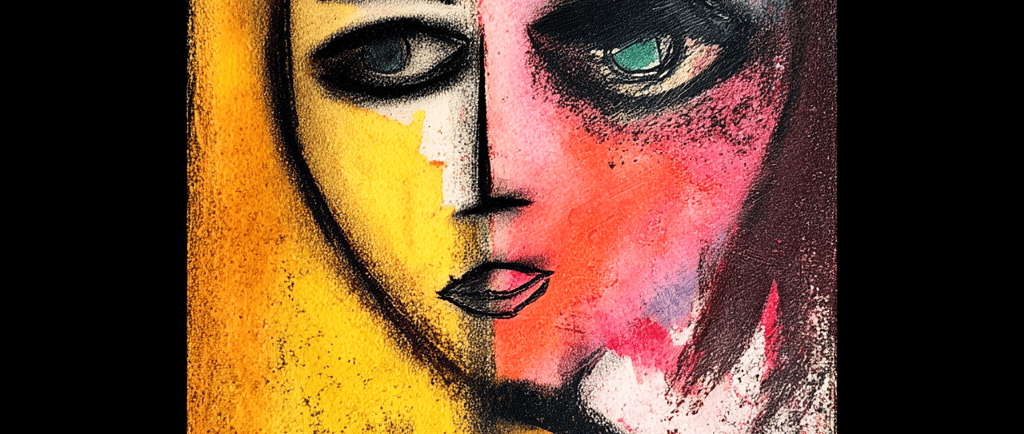
I have faced, as many others, insecurities and vulnerabilities throughout my life. Yet some challenges cut deeper than others. They touch the core of identity.
Growing up during a time of war and within a strongly patriarchal culture.
Living as a migrant across different places.
Losing stable work and the sense of grounding it brings.
These experiences did more than disrupt my external life, they forced me inward, toward my deepest existential fears and strengths.
When Personal History Shapes How We See Ourselves
In confronting these fears, I began to see how my personal narrative, the way I was raised, the environment I grew up in, and the stories passed down through generations, shaped the way I see myself and my place in the world.
As an Eastern European woman, raised without a stable or permanent family structure, I now recognize how deeply this identity influenced my self-perception. At times, I unknowingly internalized victimhood, carrying it quietly, subconsciously.
Unhealed personal narratives can distort how we position ourselves in relationship, understand our worth, navigate power, care, and belonging.
When left unexamined, they quietly dictate our choices.
The Inherited Role of Women: Strength, Labor, and Silent Sacrifice
Like many women, I was raised in a patriarchal culture, a world where women are often expected to be strong, resilient, and endlessly giving. We learn to carry the weight of responsibility quietly, to care for others before ourselves, and to find strength in endurance.
In my family lineage, women carried everything: household labor, work outside the home, emotional caregiving, financial responsibility. There was a powerful belief: The more you sacrifice for your family, the more you will be valued and loved.
But life taught me otherwise.
The Cost of Over-Sacrifice
My beautiful mother and my dear aunt both passed away at young ages due to aggressive cancer. While I do not claim to know the reasons behind their illness, I deeply feel that the sacrificing nature of these extraordinary women may, on some level, have affected their overall well-being.
This is not blame.
This is reverence.
They were among the most compassionate, loving, and influential women in my life, women whose love cannot be forgotten, and their stories live within me, shaping my own tendencies.
I began reflecting on my own patterns, my tendency to over-devote myself in relationships, my impulse to endure and sacrifice even when I intellectually resisted inequality, and my deep fear of not being taken care of.
I started asking: Where does this come from?
The answer was layered—personal, cultural, collective. At the root was a belief learned early: If I am valuable, I will be taken care of. And value, I was taught, came from sacrifice.
Healing Existential Fear and Rewriting the Narrative
As I began to truly face my existential fears, the fear of abandonment, instability, and not being held by life itself, many layers slowly revealed themselves. What first appeared as personal wounds unfolded into something much wider and more complex: cultural conditioning, generational trauma, and inherited beliefs about safety and belonging.
I began to see how sacrifice had quietly become an unconscious ticket to safety.
A silent agreement passed down through stories, behaviors, and survival strategies: If we give enough, endure enough, carry enough, we will be protected. If we disappear just enough, we will be allowed to stay.
This belief lived in my body long before I could name it. It shaped how I loved, how I worked, how I showed up in relationships. Care became synonymous with overgiving. Loyalty meant self-erasure. Strength meant endurance.
But healing gently interrupted this narrative.
As I listened more closely to myself, a different truth began to emerge , one that felt unfamiliar, yet deeply relieving. Boundaries are not a form of abandonment, they are a form of honesty. Care does not require disappearing or betraying one’s own needs. And love is not measured by how much we suffer in silence.
Healing taught me that safety does not come from sacrifice, it comes from self-trust.
True strength is not found in how much we can endure, but in how clearly we can honor our limits. True connection does not ask us to shrink or break ourselves open, it invites us to arrive whole.
In rewriting this narrative, I am learning that love can be spacious. That care can be mutual. That belonging does not require pain as proof.
In that shift, fear begins to soften, releasing its hold and making space for steadiness, dignity, and return to belonging within oneself.